

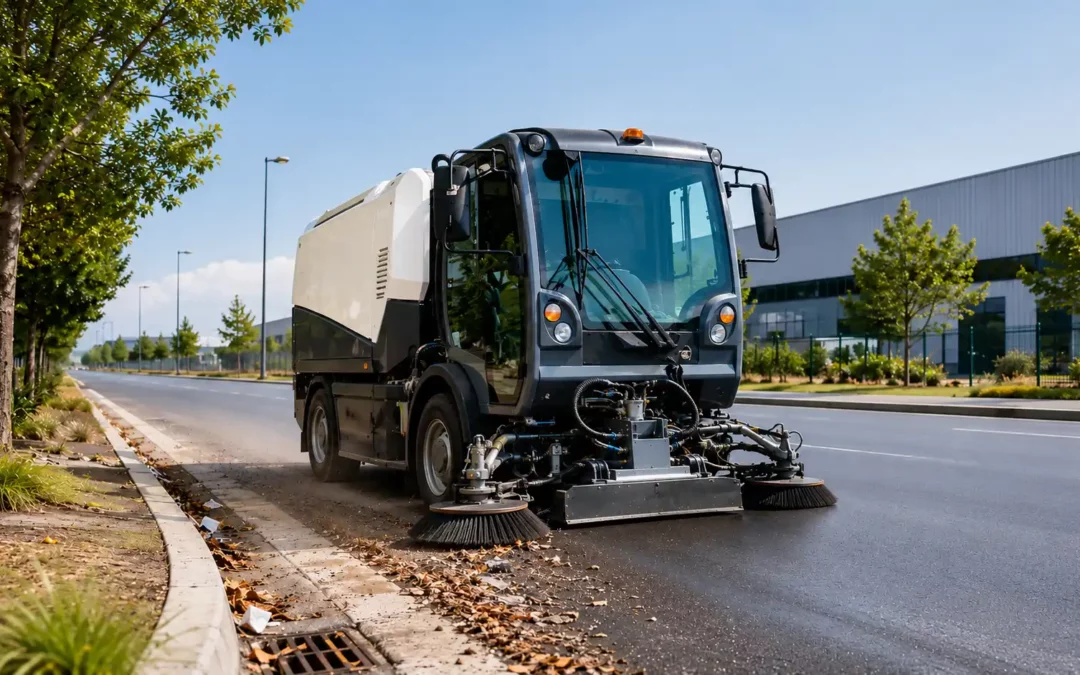
Vacuum street sweepers help you keep roads, parking areas, industrial sites, and public spaces clean with less manual labour. They use brushes, suction, water spray systems, and waste hoppers to collect dust, litter, leaves, sand, and other road debris.
For municipalities, contractors, property managers, and industrial sites, the right vacuum street sweeper can improve site appearance, reduce airborne dust, and keep debris away from drains.
What Is a Vacuum Street Sweeper?
A vacuum street sweeper is a road-cleaning machine that loosens debris from the surface and collects it using suction.
Most machines use:
- Rotating side brushes
- A central suction system
- A debris hopper
- Water spray nozzles
- Filtration or dust control systems
The brushes move dirt and debris into the suction path. The vacuum system then pulls the material into the hopper for disposal.
How Vacuum Street Sweepers Work
Vacuum street sweepers follow a simple cleaning process.
- Brushes loosen debris: Side and main brushes sweep dirt, leaves, sand, litter, and small stones from the road surface.
- Suction lifts the waste: The vacuum system pulls the loosened material into the machine.
- Water controls dust: Spray nozzles dampen the surface and reduce airborne dust.
- The hopper stores debris: Collected waste moves into a storage hopper until the operator empties it.
- Filters help manage fine particles: Some machines include filtration systems for finer dust control.
This setup makes vacuum sweepers useful for areas where dust, litter, and loose debris need regular removal.
Main Benefits of Vacuum Street Sweepers
1. Cleaner Roads and Public Spaces
Vacuum street sweepers remove the dirt that builds up on roads, pavements, parking lots, and industrial yards.
They help collect:
- Dust
- Leaves
- Litter
- Sand
- Gravel
- Packaging waste
- Fine debris near kerbs
Regular sweeping keeps public areas cleaner and improves the appearance of streets, estates, factories, shopping centres, and business parks.
2. Better Dust Control
Dust can become a problem in urban, industrial, and construction areas.
Vacuum street sweepers reduce loose dust before wind, traffic, or machinery spreads it further. Machines with water spray systems and filters are useful where air quality matters.
3. Less Debris in Stormwater Drains
Road debris often ends up in drains after rain.
Vacuum street sweepers help collect leaves, litter, sand, and other waste before it reaches stormwater systems. This can reduce blocked drains and lower the amount of waste entering waterways.
4. Lower Manual Labour
Manual sweeping takes time and staff.
A vacuum street sweeper covers larger areas faster than a cleaning team with brooms and bins. This helps municipalities, contractors, and property owners manage cleaning work with fewer labour hours.
5. Better Site Safety
Loose sand, stones, broken packaging, and leaves can create hazards.
Regular sweeping can make roads, parking areas, and industrial yards safer for vehicles, pedestrians, forklifts, and site workers.
Types of Vacuum Street Sweepers
Different sites need different machines. The best option depends on your cleaning area, debris type, operating hours, and budget.
| Sweeper Type | Best For | Main Benefit |
|---|---|---|
| Compact vacuum sweepers | Pavements, precincts, estates, tight streets | Easy to manoeuvre |
| Truck-mounted sweepers | Main roads, highways, large sites | High capacity |
| Industrial sweepers | Factories, warehouses, yards | Handles heavier site debris |
| Electric sweepers | Urban areas, noise-sensitive sites | Lower emissions and quieter operation |
| Diesel sweepers | Long shifts and heavy-duty work | Strong power and longer operating range |
Mechanical Sweepers vs Vacuum Street Sweepers
Mechanical sweepers and vacuum street sweepers do similar work, but they collect debris differently.
Mechanical Sweepers
Mechanical sweepers use brushes and conveyor systems to collect larger debris.
They work well for:
- Leaves
- Stones
- Sand
- Litter
- Heavier debris
Vacuum Street Sweepers
Vacuum street sweepers use suction to lift debris into the hopper.
They work well for:
- Dust
- Fine particles
- Light litter
- Sand
- Leaves
- Kerbside cleaning
For fine dust control, a vacuum street sweeper is usually the better choice.
Electric vs Diesel Vacuum Street Sweepers
Electric Vacuum Street Sweepers
Electric sweepers suit areas where noise and emissions matter.
They are useful for:
- City centres
- Shopping centres
- Estates
- Business parks
- Indoor or semi-indoor industrial areas
- Early morning cleaning routes
Main benefits include quieter operation, no tailpipe emissions during use, and lower fuel use.
Diesel Vacuum Street Sweepers
Diesel sweepers suit heavy-duty work and long operating shifts.
They are useful for:
- Highways
- Large industrial sites
- Municipal road networks
- Construction areas
- Long-distance cleaning routes
Diesel models often offer more range and stronger power for demanding work.
Features to Compare Before Buying a Vacuum Street Sweeper
Suction Power
Suction power affects how well the machine collects dust, sand, litter, and fine debris.
A stronger suction system can reduce the number of passes needed on dirty surfaces.
Hopper Capacity
A larger hopper means the operator can clean for longer before emptying the machine.
This matters on:
- Long road routes
- Industrial yards
- Large parking areas
- Municipal cleaning contracts
Brush Layout
Check the number, size, and position of the brushes.
Good brush coverage helps clean:
- Kerbs
- Corners
- Gutters
- Narrow lanes
- Parking bay edges
Dust Control System
Dust control should be a priority.
Look for:
- Water spray nozzles
- Good filtration
- Sealed debris handling
- Easy filter cleaning
- Adjustable water flow
Manoeuvrability
A compact sweeper works better in tight areas.
A larger truck-mounted sweeper works better for long roads and bigger open spaces.
Operator Comfort
Operators may spend hours in the machine.
Compare:
- Cabin visibility
- Seat comfort
- Control layout
- Noise levels
- Air conditioning
- Camera systems
Maintenance Access
Easy access to filters, brushes, nozzles, belts, hoses, and hydraulic parts reduces downtime.
A machine that is hard to service can cost more over time.
Where Vacuum Street Sweepers Are Used
Vacuum street sweepers work across many cleaning environments.
Public Roads
Municipal teams use them to clean residential streets, main roads, bus routes, and kerbside areas.
Highways
Larger sweepers help remove road debris from high-speed routes and emergency lanes.
Parking Lots
Shopping centres, office parks, hospitals, schools, and estates use sweepers to keep parking areas clean.
Industrial Sites
Factories, depots, warehouses, and mines use sweepers to manage dust, packaging waste, sand, and production debris.
Construction Areas
Construction sites often track dust and dirt onto nearby roads. A vacuum sweeper can help control this.
Seasonal Cleaning
Vacuum street sweepers can also help with:
- Leaves in autumn
- Sand and dust in dry months
- Pollen in spring
- Salt or grit in cold regions
- Storm debris after heavy rain
Maintenance Tips for Vacuum Street Sweepers
Good maintenance keeps the sweeper working properly and helps prevent expensive repairs.
Daily Checks
Before use, check:
- Brushes
- Tyres
- Water level
- Hopper condition
- Suction hose
- Warning lights
- Hydraulic leaks
- Nozzle blockages
Clean Filters Often
Blocked filters reduce suction and dust control.
Clean or replace filters according to the manufacturer’s service schedule.
Inspect Brushes
Worn brushes reduce cleaning performance.
Replace brushes when they no longer make proper contact with the road surface.
Check Water Spray Nozzles
Blocked nozzles can increase dust.
Clean the nozzles and check that water sprays evenly.
Empty and Wash the Hopper
Waste can build up inside the hopper.
Empty it after use and wash it when needed to reduce corrosion, odours, and blockages.
Keep a Service Log
Track:
- Repairs
- Parts replaced
- Service dates
- Operating hours
- Brush changes
- Filter changes
This helps you plan maintenance and avoid surprise downtime.
Cost Factors to Consider
The cheapest vacuum street sweeper is not always the best option.
You need to compare the full cost of ownership.
Initial Purchase Price
The upfront cost depends on:
- Machine size
- Brand
- Power source
- Hopper capacity
- Dust control system
- Added technology
- New or used condition
Running Costs
Running costs may include:
- Fuel or electricity
- Water use
- Brushes
- Filters
- Tyres
- Labour
- Repairs
- Insurance
- Scheduled servicing
Downtime Costs
A sweeper that breaks down often can cost you money through delayed work and missed cleaning schedules.
Reliable parts support matters.
Financing or Leasing
Some buyers may prefer leasing or finance instead of a cash purchase.
This can help spread the cost over time.
How to Choose the Right Vacuum Street Sweeper
Use these questions before you buy or hire a machine.
| Question | Why It Matters |
|---|---|
| What area do you need to clean? | Determines sweeper size |
| What debris do you collect most? | Affects suction and brush choice |
| How many hours will it run per day? | Impacts fuel type and durability |
| Do you need low noise? | May point to electric models |
| Do you need fine dust control? | Filtration and water spray matter |
| How often can you empty the hopper? | Affects hopper capacity |
| Who will service the machine? | Parts support is important |
| Will it work in tight areas? | Manoeuvrability matters |
Future Trends in Vacuum Street Sweepers
Vacuum street sweeper technology is improving.
Current trends include:
- Electric sweepers
- Hybrid drive systems
- Lower noise levels
- Better filtration
- GPS route tracking
- Data reporting
- Camera-assisted operation
- Improved water-saving systems
- Cleaner engine options
These features help operators clean more efficiently while reducing fuel use, emissions, and downtime.
Final Thoughts
Vacuum street sweepers are a practical solution for road cleaning, dust control, and debris management. They help municipalities, contractors, property managers, and industrial sites keep outdoor areas cleaner with less manual work.
Before buying or hiring a vacuum street sweeper, compare the cleaning area, debris type, hopper size, suction power, dust control system, running costs, and service support. The right machine can save time, improve cleanliness, and reduce long-term maintenance problems.
FAQ Section
What is a vacuum street sweeper used for?
A vacuum street sweeper is used to clean roads, parking areas, industrial yards, pavements, and public spaces. It collects dust, leaves, litter, sand, and other loose debris.
How does a vacuum street sweeper work?
It uses rotating brushes to loosen debris from the road surface. A suction system then pulls the debris into a hopper for disposal. Many machines also use water spray systems to reduce dust.
Are vacuum street sweepers better than mechanical sweepers?
Vacuum street sweepers are better for fine dust and lighter debris. Mechanical sweepers can be better for heavier debris. The best option depends on the site and the type of waste you need to collect.
Are electric vacuum street sweepers worth it?
Electric vacuum street sweepers can be worth it for cities, estates, shopping centres, and areas where low noise and lower emissions matter. Diesel models may still be better for heavy-duty work and long shifts.
How often should a street sweeper be serviced?
Service intervals depend on the machine and usage. Daily checks, filter cleaning, brush inspections, and regular servicing help prevent breakdowns and keep the sweeper working properly.