

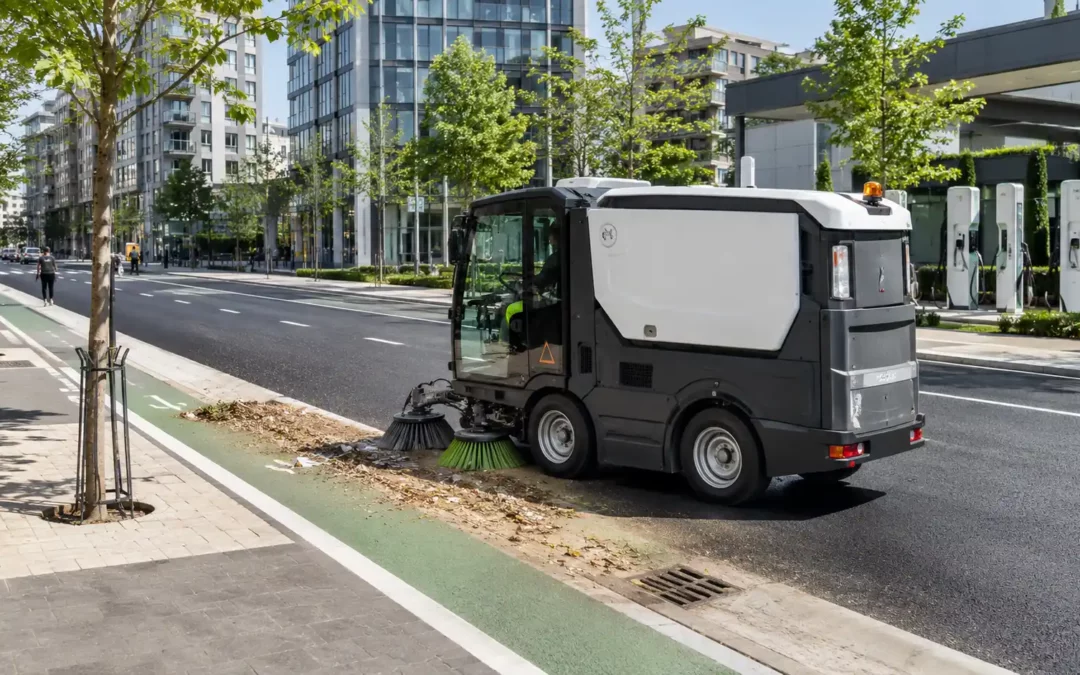
Electric street sweepers help municipalities, contractors, estates, campuses, and commercial sites clean roads and public spaces with less noise and no tailpipe emissions during operation.
They are becoming a practical choice for cities that want cleaner streets, lower fuel use, better dust control, and quieter cleaning routes.
What Are Electric Street Sweepers?
Electric street sweepers are road-cleaning machines powered by batteries or hybrid electric systems. They use electric motors to drive the vehicle and operate the sweeping system.
Most electric sweepers include:
- Rechargeable battery packs
- Electric drive motors
- Rotating brushes
- Suction systems
- Water spray systems
- Dust filtration
- Debris hoppers
- Digital controls or route-monitoring tools
They are available as compact sweepers for tight urban areas and larger sweeper trucks for wider roads and municipal routes.
Why Cities Are Moving to Electric Street Sweepers
Urban cleaning teams face rising fuel costs, stricter environmental targets, noise complaints, and pressure to run cleaner municipal fleets.
Electric street sweepers help solve several of these problems. They can reduce diesel use, lower noise levels, and support cleaner air in busy areas.
Main Benefits of Electric Street Sweepers
No Tailpipe Emissions During Operation
Electric street sweepers do not produce tailpipe emissions while operating. This makes them useful in dense urban areas, pedestrian zones, residential streets, campuses, and enclosed or semi-enclosed sites.
Lower Noise Levels
Electric motors are quieter than diesel engines. This helps when sweeping near homes, hotels, hospitals, schools, offices, and shopping centres.
Lower noise also gives cleaning teams more flexibility to work early in the morning or later in the evening.
Lower Long-Term Running Costs
Electric sweepers can cost less to run over time because electricity is often cheaper than diesel and electric drivetrains have fewer moving parts.
Actual savings depend on electricity costs, route length, charging setup, maintenance support, battery life, and how often the machine runs.
Better Fit for Clean Fleet Targets
Municipalities and private companies often need to reduce fleet emissions. Electric street sweepers can support these targets while still handling daily cleaning work.
Improved Operator Comfort
Quieter operation, smoother driving, and digital controls can make electric sweepers easier for operators to use during long shifts.
Electric Street Sweepers vs Diesel Street Sweepers
Electric and diesel street sweepers can both clean roads effectively. The best choice depends on route length, charging access, budget, and operating conditions.
| Comparison Point | Electric Street Sweepers | Diesel Street Sweepers |
|---|---|---|
| Emissions during use | No tailpipe emissions | Produces exhaust emissions |
| Noise | Lower noise levels | Usually louder |
| Running cost | Can be lower, depending on electricity and charging costs | Can be higher due to fuel and engine maintenance |
| Range | Depends on battery size and workload | Usually longer before refuelling |
| Maintenance | Fewer engine-related parts | More engine-related servicing |
| Best use | Urban routes, quiet zones, campuses, estates, shopping centres | Long routes, heavy-duty work, areas without charging access |
Types of Electric Street Sweepers
Compact Electric Sweepers
Compact electric sweepers are built for narrow streets, pavements, alleys, pedestrian areas, estates, campuses, and shopping centres.
They are useful where space is limited and low noise matters.
Electric Sweeper Trucks
Electric sweeper trucks suit wider roads, larger parking areas, business parks, and municipal routes. They usually offer more hopper capacity and a wider sweeping path.
Hybrid Street Sweepers
Hybrid sweepers use electric power with a combustion engine or auxiliary system. They can suit users who want lower emissions but still need longer operating range.
| Type | Best For | Main Benefit |
|---|---|---|
| Compact electric sweepers | Narrow streets, pavements, estates, pedestrian zones | Easy to manoeuvre and quiet |
| Electric sweeper trucks | Municipal routes, wide roads, large sites | Higher capacity |
| Hybrid street sweepers | Longer routes and mixed-use cleaning | Extended operating range |
How Electric Street Sweepers Work
Electric street sweepers use battery power to run the drive system, brushes, suction system, water pumps, and onboard electronics.
- The battery powers the machine: Stored electricity runs the motors and cleaning systems.
- Brushes loosen debris: Side and main brushes move dirt, dust, leaves, and litter into the collection path.
- Suction collects debris: The suction system lifts material into the hopper.
- Water spray controls dust: Spray nozzles reduce airborne dust while sweeping.
- Filters manage fine particles: Filtration helps capture fine dust.
- Digital systems monitor performance: Some models track routes, battery health, operating hours, and service needs.
Battery Life and Charging
Battery life depends on the sweeper model, battery capacity, route length, terrain, sweeping load, brush use, suction demand, and operator settings.
Before buying an electric street sweeper, check:
- Operating time per charge
- Charging time
- Battery warranty
- Battery replacement cost
- Charging plug requirements
- On-site electrical capacity
- Performance with full suction and water systems running
A machine that looks suitable on paper should still be tested on the real route before purchase.
Key Features to Compare Before Buying
| Feature | Why It Matters |
|---|---|
| Battery capacity | Controls how long the sweeper can work before recharging. |
| Charging speed | Affects shift planning and daily route coverage. |
| Suction power | Determines how well the machine collects dust, sand, leaves, and litter. |
| Filtration | Helps control fine dust and airborne particles. |
| Hopper size | Affects how often the operator must empty the machine. |
| Brush layout | Helps clean kerbs, corners, gutters, and narrow edges. |
| Water system | Controls dust and supports better sweeping performance. |
| Digital monitoring | Helps track battery status, routes, faults, and service intervals. |
| Local support | Parts, servicing, and training affect long-term ownership costs. |
Where Electric Street Sweepers Are Used
Electric street sweepers are useful in areas where clean operation, lower noise, and regular sweeping matter.
- City centres
- Residential streets
- Municipal routes
- Shopping centres
- Business parks
- Hospitals
- Schools and universities
- Estates
- Parking areas
- Pedestrian zones
- Airports and transport hubs
- Industrial parks
Maintenance Tips for Electric Street Sweepers
Electric street sweepers still need regular maintenance. They have fewer engine-related parts than diesel models, but the battery, electrical system, brushes, filters, and suction parts still need care.
Check Battery Health
Monitor battery condition, charging patterns, and operating time. Follow the manufacturer’s charging guidelines to protect battery life.
Inspect Brushes and Wear Parts
Worn brushes reduce sweeping performance. Check brush wear daily and replace brushes when needed.
Clean Filters
Blocked filters reduce suction and dust control. Clean or replace filters according to the service schedule.
Check Water Spray Nozzles
Blocked nozzles can increase dust. Clean the nozzles and confirm that water sprays evenly.
Update Software
Some electric sweepers use onboard software for monitoring, diagnostics, and battery management. Keep the software updated according to the manufacturer’s advice.
Keep a Service Log
Track repairs, battery checks, brush changes, filter replacements, faults, charging problems, and service dates.
Cost Factors to Consider
Electric street sweepers often cost more upfront than diesel alternatives. The long-term value depends on how often the machine runs and how well the charging and maintenance setup is managed.
| Cost Factor | What to Check |
|---|---|
| Purchase price | Compare new, used, compact, truck-mounted, and hybrid options. |
| Charging setup | Check whether your site needs electrical upgrades or dedicated chargers. |
| Electricity cost | Work out the charging cost per route or per shift. |
| Battery replacement | Ask about battery lifespan, warranty, and replacement pricing. |
| Servicing | Check local support, service intervals, technician availability, and parts supply. |
| Training | Operators need training on charging, route planning, safety, and daily checks. |
| Downtime | A machine with poor local support can cost more through delays and missed cleaning routes. |
How to Choose the Right Electric Street Sweeper
Use your route and cleaning needs as the starting point.
Ask these questions before buying:
- How long is the cleaning route?
- How many hours must the sweeper run per shift?
- Can the machine recharge between shifts?
- Is the route flat or hilly?
- What debris does it need to collect?
- Do you need fine dust control?
- How important is low noise?
- Do you need a compact sweeper or larger sweeper truck?
- Is local servicing available?
- Can you test the machine on your actual site?
Future Trends in Electric Street Sweepers
Electric street sweeping technology is moving quickly. New models are becoming smarter, quieter, and more efficient.
Future trends include:
- Longer battery life
- Faster charging
- Better battery monitoring
- More compact electric models
- GPS route tracking
- Real-time performance reporting
- Improved filtration
- Automated sweeping functions
- Integration with fleet management systems
These improvements will make electric street sweepers more useful for municipalities, contractors, and private site managers.
Final Thoughts
Electric street sweepers give you a cleaner, quieter option for urban cleaning. They can reduce emissions during operation, lower noise levels, and cut some long-term running costs.
Before choosing a model, compare battery life, charging time, suction performance, filtration, hopper size, safety features, route requirements, and local service support. The right electric street sweeper can help you clean streets and public areas with less noise, lower fuel use, and better long-term control over operating costs.
FAQ Section
What is an electric street sweeper?
An electric street sweeper is a road-cleaning machine powered by batteries or hybrid electric systems. It uses brushes, suction, water spray, and filtration to collect dust, litter, leaves, and road debris.
Are electric street sweepers better than diesel sweepers?
Electric street sweepers are better for low-noise cleaning and no tailpipe emissions during use. Diesel sweepers may still suit long routes, heavy-duty work, or areas without charging access.
How long does an electric street sweeper battery last?
Battery life depends on the model, battery size, route length, terrain, suction use, brush use, and operator settings. Always compare real operating time, not only the brochure figure.
Where can electric street sweepers be used?
They can be used in city centres, residential streets, shopping centres, hospitals, schools, campuses, estates, parking areas, pedestrian zones, business parks, and industrial sites.
What should you check before buying an electric street sweeper?
Check battery life, charging time, suction power, filtration, hopper capacity, brush layout, safety features, service support, parts availability, warranty terms, and whether the machine suits your actual route.