


Curious whether you can lower site costs without cutting corners? Start by seeking providers with clear, up-front pricing and no hidden fees. That transparency makes it simple to compare offers and spot real savings.
Combine flexible terms and longer hire periods to secure better rates. Asking about multi-vehicle or seasonal promotions can reveal discounts tied to project duration and demand.
Check local availability early. Containers commonly come in 10, 12, 15, 20, 30 and 40 yard sizes and supply varies by location. Booking ahead helps lock in the best options.
Manage bookings online for speed and fewer calls. Convenient account tools reduce admin time and keep services running to schedule.
Expect prompt, safe delivery by trained drivers so your site avoids downtime. Match container size to the type of waste — from heavy concrete to mixed renovation debris — to prevent overage charges.
Ways to save on dustbin truck rentals right now
Small timing shifts and a clear quote often save more than haggling over daily rates.
Ask about current promotions and whether discounts stack for booking multiple vehicles on the same timeline. Coordinate several projects on one account to unlock volume pricing and simplify invoicing for your businesses.
Current promotions, multi-vehicle and multi-project savings
Request line-item quotes so you can see haul frequency, disposal type and service distance costs. Removing unneeded extras cuts total spend.
How flexible terms and up-front pricing reduce total cost
- Shift start dates or accept off-peak deliveries to lower daily or weekly rates.
- Secure popular 20, 30 and 40 yard containers early to avoid surge pricing.
- Compare options like lower haul caps for heavy waste against larger boxes for light debris.
- Coordinate delivery windows to reduce idle days and avoid overage charges.
Use online account tools to schedule, reschedule swaps and manage support. Prompt, safety-trained drivers and clear pricing make it easier to keep your fleet lean and on budget for each project.
dustbin truck rental pricing: factors, ranges and how discounts apply
Costs hinge on what you need moved, how long you need it moved for, and where it goes.
Project scope and duration
Short-term weekend clear-outs usually use smaller containers and have higher daily rates. Long-term hires for construction sites often come with better daily pricing, especially outside peak months.
Load characteristics and weight limits
Heavy materials like concrete and asphalt raise disposal fees and may hit tonnage caps. Specify the expected weight so providers set correct haul frequency and avoid surprise charges.
Container sizes and matching yardage
Choose 10–15 yard boxes for compact, dense loads. Select 20–40 yard units for bulky, lighter waste to avoid paying for unused space.
Location, availability and inventory
Distance to transfer stations and regional disposal fees affect the final charge. Inventory varies by service area, so confirm your address early to lock in the best options.
| Container (yard) | Typical pickup loads | Best use | Notes |
|---|---|---|---|
| 10 | 4–6 | Compact, heavy debris | Good for tight sites |
| 20 | 8–10 | Mixed renovation waste | Balanced capacity |
| 40 | 14–16 | Bulky, light materials | Fewer hauls for large projects |
Pro tip: Commit to set haul schedules, bundle sizes for phased projects or coordinate multiple pickups to unlock discounts. Ask for quotes that list yardage, weight caps and haul cadence so you can compare like-for-like.
Flexible rental options to fit your waste management plan
Choose terms that match the pace of your project so costs stay predictable and work keeps moving.
Providers offer short- and long-term agreements to suit a single-site refurb or a multi-phase build. Transparent terms help control budgets and reduce idle days.
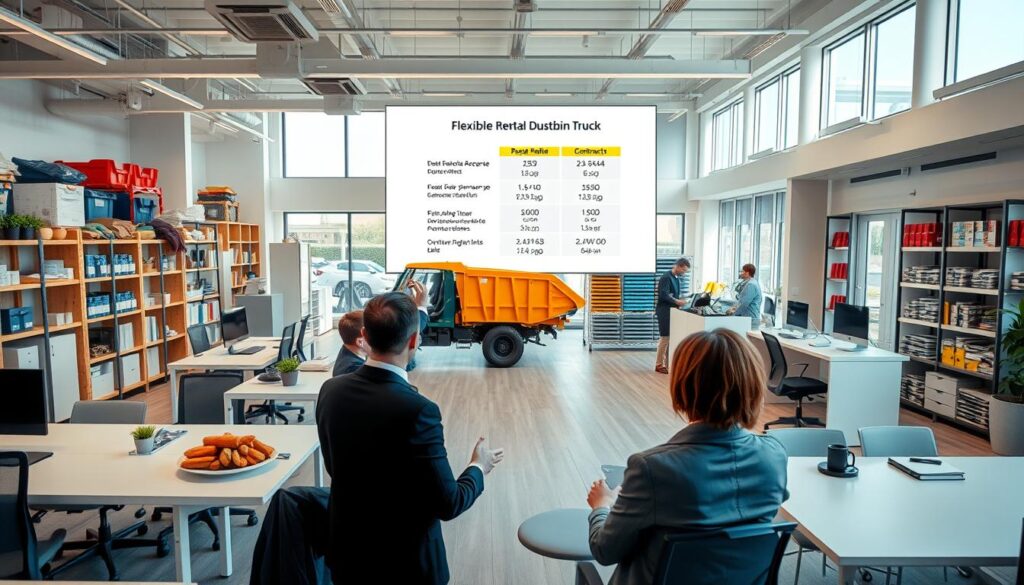
Short-term and long-term choices for business and construction
Present short- and long-term hire choices give teams the flexibility to scale. Align agreement length with programme milestones to avoid excess fees and unlock loyalty savings.
Lease-to-own and purchase pathways
Lease-to-own and direct purchase routes let businesses phase ownership while keeping cash flow steady. This supports growing fleets and planned expansion.
Manage everything online, with 24/7 support
Use online dashboards to book, swap and extend services, view invoices and raise service tickets. 24/7 support provides phone triage or swift vehicle replacement to keep sites moving.
“Jobsite delivery by trained crews ensures safe positioning and fast set-up,”
| Option | Best for | Key benefit |
|---|---|---|
| Short-term hire | Weekend clear-outs, short jobs | Lower commitment, quick turnarounds |
| Long-term hire | Construction phases | Better daily rates, steady service |
| Lease-to-own / Purchase | Growing operations | Predictable costs, asset ownership |
Choose from a proven fleet of refuse and garbage trucks
Select proven vehicles that match site access and haul needs to keep schedules tight and costs low.
Packer trucks compress garbage and recyclables to maximise payload. That reduces trips and shortens route time for crews.
Packer equipment speeds collections in urban areas. Fewer hauls lower fuel use and labour costs while keeping sites tidy.
Packer trucks: compacting capability to speed collection
Packer units squeeze waste into a denser load. This increases yard capacity per pickup and improves overall collection efficiency.
Roll-off trucks: moving large containers and dumpsters with ease
Roll-off vehicles load, transport and position big containers safely. They simplify heavy clearances and phased debris removal on busy sites.
Capacities and power: up to 75,000 lb loads and 380+ horsepower
Capability benchmarks: some vehicles handle up to 75,000 lb in a 22‑foot container and offer 380+ horsepower. Check axle ratings and lifting gear to match route gradients and weight limits.
Container sizes commonly supported: 10, 12, 15, 20, 30 and 40 yard
- 10–15 yard: dense rubble and compact loads.
- 20 yard: mixed renovation waste for steady projects.
- 30–40 yard: bulky, light materials for major refits.
Modern equipment improves driver comfort and safety. Hydraulics and intuitive controls speed exchanges and cut manual handling.
“A balanced fleet mix lets teams run compacted collections in tight zones while roll‑off swaps keep larger sites moving,”
Tip: Group collections by material where possible and confirm specs at booking so the chosen vehicles match access, weight and yard needs.
Nationwide coverage, safe delivery and 24/7 support
A reliable national network keeps your site moving, with teams ready to respond across most of the USA and Canada.
Well‑maintained vehicles are inspected before each dispatch. This helps ensure dependable service from first delivery to final pickup.
Drivers are trained for safe, accurate positioning on busy jobsites. That reduces disruption and lowers risks to pedestrians and plant.
Trained drivers, jobsite delivery and rapid replacements when needed
Providers offer 24/7 assistance and technician access to resolve issues fast. Rapid replacement keeps programmes on schedule.
Local availability varies, so lock in dates early to secure the right inventory and avoid delays.
“Clear, transparent quotes set expectations for service levels, haul cadence and any surcharges before work begins.”
| Service | Benefit | When to choose |
|---|---|---|
| Inspected vehicles | Higher reliability, fewer delays | All long and short term hires |
| Trained drivers | Safe positioning, less site disruption | Busy urban or high‑traffic sites |
| 24/7 support | Technician access or rapid replacement | Critical timelines and multi‑state projects |
Share site specifics—access windows, safety briefings and inductions—to make delivery seamless on day one. Years of experience help providers predict seasonal demand and advise your business on the best plan.
Get your transparent quote today and secure the best rate
Ask for an upfront breakdown of services, dates and container sizes to reveal all available savings.
Request a fast, transparent quote today that lists location, dates, yard size, material type and haul cadence. This shows eligible discounts and keeps costs predictable.
Select the right container size at the start to avoid overage fees and reduce swap frequency. Outline phases and adjacent projects so volume and multi‑vehicle savings apply across the programme.
Choose flexible options—short‑term, long‑term or lease‑to‑own—and note online tools that let you manage schedules as site needs change. Trained drivers deliver and position vehicles safely for home, commercial or construction collection.
Book early to secure preferred equipment and rates, and discuss purchase pathways so your fleet and waste management plans align with future growth.